I still remember the first time I tried Korean Beef Rice Bowls—it was a chilly evening, and I had just gotten home from a long day at work. My friend had invited me over for dinner, and when I walked into her kitchen, the aroma of sizzling beef mixed with garlic and ginger wrapped around me like a warm hug. She was stirring a vibrant mix of colorful vegetables, and I couldn’t wait to dig in. As she plated the dish over fluffy jasmine rice and topped it with a sprinkle of green onions and sesame seeds, my mouth watered with anticipation. The first bite was pure bliss—the tender beef, the savory soy sauce, and the crunch from the veggies created a perfect harmony of flavors.
Since that night, Korean Beef Rice Bowls have become a staple in my kitchen. They’re easy to prepare, quick to cook, and always a crowd-pleaser. Whether I’m hosting friends or just making dinner for myself, I can whip up this comforting dish in no time. It’s one of those meals that feels indulgent but is surprisingly simple. The best part? You can customize it to fit your tastes or use whatever veggies you have on hand. For me, Korean Beef Rice Bowls represent the perfect blend of comfort food and culinary adventure, and they’ve brought a little piece of that cherished memory into my home. I can’t wait for you to try this recipe and create your own unforgettable moments around the dinner table!
Why This Korean Beef Rice Bowls Recipe Will Become Your Go-To
The Secret Behind Perfect Korean Beef Rice Bowls
What makes this Korean Beef Rice Bowls recipe stand out is the balance of flavors and textures. The flank steak is marinated in a blend of soy sauce, sesame oil, and brown sugar, creating a beautifully caramelized crust when cooked. The addition of fresh ginger and garlic infuses the beef with a depth of flavor that’s hard to resist. Cooking the vibrant vegetables—broccoli and bell peppers—just until tender-crisp retains their nutrients and adds a satisfying crunch to each bite. Plus, the fluffy jasmine rice acts as the perfect base, soaking up all those delicious juices. This dish is not just a meal; it’s an experience that brings together the warmth of home cooking with the exciting tastes of Korean cuisine.
Essential Ingredients You’ll Need
To make these Korean Beef Rice Bowls truly shine, you’ll need the following ingredients:
1 pound flank steak, thinly sliced
Flank steak is a lean cut that becomes incredibly tender when marinated and cooked quickly over high heat. Its rich flavor pairs beautifully with the other ingredients.
2 tablespoons soy sauce
Soy sauce adds a salty umami punch that enhances the overall taste of the beef, contributing to that authentic Korean flavor.
1 tablespoon sesame oil
This oil not only brings a nutty richness but also a distinct aroma that elevates the dish. It’s a key ingredient in many Korean recipes.
1 tablespoon brown sugar
The brown sugar caramelizes during cooking, giving the beef a lovely glaze and balancing the salty soy sauce.
2 cloves garlic, minced
Garlic adds a welcome pungency and warmth, making the dish more aromatic and flavorful.
1 teaspoon fresh ginger, grated
Fresh ginger brings a hint of spice and brightness that perfectly complements the rich flavors of the beef.
1 cup broccoli florets
Broccoli adds a pop of color and a satisfying crunch, while also providing vitamins and minerals.
1 bell pepper, sliced
The bell pepper contributes sweetness and vibrant color, making your dish visually appealing and delicious.
2 cups cooked jasmine rice
Jasmine rice is fragrant and fluffy, serving as the ideal base to soak up the savory beef and sauce.
2 green onions, chopped
Green onions add a fresh, crisp element that brightens the dish and provides a lovely finishing touch.
Sesame seeds for garnish
These seeds add a delightful crunch and nutty flavor, making your bowls look and taste gourmet.
Step-by-Step Korean Beef Rice Bowls Instructions
Preparing Your Korean Beef Rice Bowls
Preparing these Korean Beef Rice Bowls is a breeze. With a prep time of just 15 minutes and a cook time of 30 minutes, you’ll have a delicious meal ready in a total of 45 minutes. You’ll need a sharp knife, a cutting board, a large skillet or wok, and a serving dish. Let’s dive into the steps!
1- Start by marinating the flank steak. In a mixing bowl, combine the soy sauce, sesame oil, brown sugar, minced garlic, and grated ginger. Add the thinly sliced flank steak, ensuring each piece is well coated. Let it marinate for at least 10 minutes—the longer, the better for flavor.
2- While the steak is marinating, heat a large skillet or wok over medium-high heat. Once hot, add the marinated beef, spreading it out in a single layer. Let it cook undisturbed for about 3-4 minutes until a nice sear forms. Then, stir-fry for another 2-3 minutes until the beef is cooked through and browned.
3- Once the beef is cooked, remove it from the skillet and set it aside. In the same skillet, add the broccoli florets and sliced bell pepper. Stir-fry for about 4-5 minutes until they are tender-crisp and vibrant in color. You want them to retain some crunch for texture.
4- Return the cooked beef to the skillet with the vegetables. Stir everything together, allowing the flavors to meld for another minute. You should see the sauce glistening on the beef and the vegetables taking on a beautiful shine.
5- While you finish cooking the beef and veggies, prepare your jasmine rice if it’s not already cooked. Fluff it with a fork and divide it among your serving bowls.
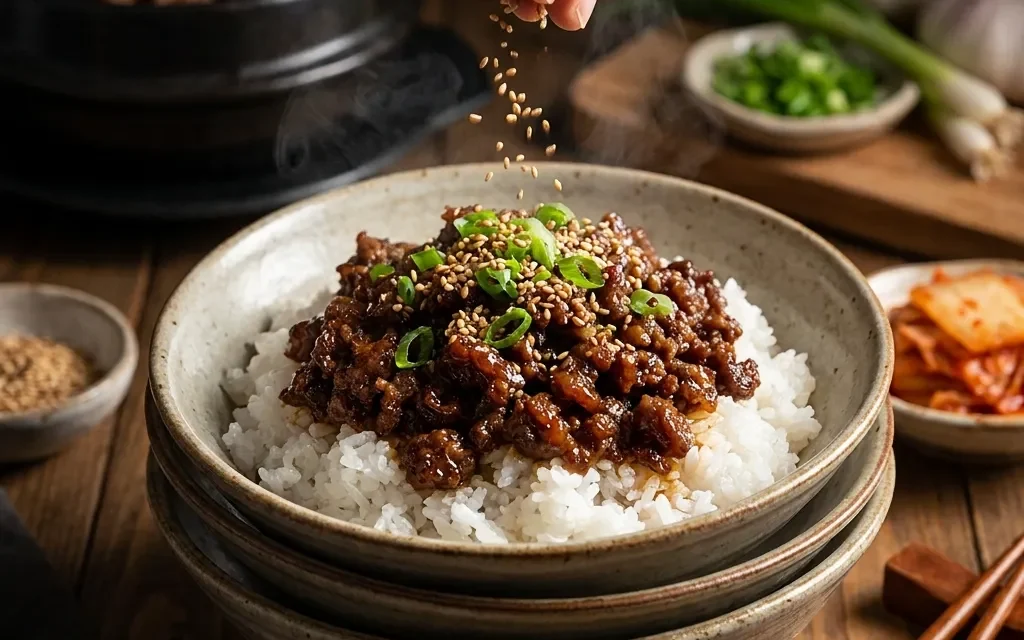
6- To serve, spoon the beef and vegetable mixture over the jasmine rice. Garnish with chopped green onions and a sprinkle of sesame seeds for that perfect finishing touch. The dish should look colorful and inviting!
Pro Tips for Success
To ensure your Korean Beef Rice Bowls turn out perfectly, keep these pro tips in mind:
- Slice the flank steak against the grain. This technique keeps the meat tender and easy to chew.
- Don’t overcrowd the pan when cooking the beef. Cook in batches if necessary to achieve a nice sear.
- Use fresh ingredients for the best flavor. Fresh garlic and ginger make a noticeable difference in taste.
- Adjust the marination time based on your preference. While 10 minutes is great, letting it marinate longer (up to an hour) enhances the flavor even more.
- Feel free to customize the vegetables based on what you have on hand or what’s in season.
Serving and Storing Your Korean Beef Rice Bowls
Perfect Pairings for Korean Beef Rice Bowls
These Korean Beef Rice Bowls serve 4, making them perfect for a family meal or gathering with friends. To elevate your dining experience, consider serving them with a side of kimchi, which adds a tangy and spicy kick. A simple cucumber salad dressed with rice vinegar also complements the dish beautifully. For drinks, a light lager or Korean soju can enhance the meal, making it feel even more authentic.
Storage and Make-Ahead Tips
If you have leftovers, store them in an airtight container in the refrigerator for up to 3 days. To reheat, simply microwave in 1-minute intervals until heated through. If you want to meal prep, cook the beef and vegetables ahead of time and store them separately from the rice. This way, you can quickly assemble your bowls throughout the week. If freezing, store the beef and veggies in a freezer-safe container for up to 2 months. Thaw in the refrigerator overnight before reheating.
Variations and Dietary Adaptations for Korean Beef Rice Bowls
Creative Korean Beef Rice Bowls Variations
Feel free to get creative with your Korean Beef Rice Bowls! Here are a few variations to try:
- Spicy Korean Beef Bowls: Add a tablespoon of gochujang (Korean chili paste) to the marinade for a spicy kick.
- Vegetable-Loaded Bowls: Include additional vegetables like snap peas, carrots, or zucchini for extra nutrition and color.
- Rice Alternatives: Substitute jasmine rice with cauliflower rice for a low-carb option or quinoa for added protein.
- Bibimbap Style: Serve the beef and veggies over a bed of rice with a fried egg on top for a delicious twist.
Making Korean Beef Rice Bowls Diet-Friendly
If you have dietary restrictions, you can easily adapt this recipe:
- Gluten-Free: Use tamari or coconut aminos instead of soy sauce to make it gluten-free.
- Vegan: Substitute the flank steak with tempeh or mushrooms, and use a plant-based soy sauce alternative.
- Low-Carb: Use riced cauliflower instead of jasmine rice for a low-carb version that’s equally satisfying.
- Paleo: Opt for coconut sugar instead of brown sugar and use more veggies as a base instead of rice.
Frequently Asked Questions
Q: Can I substitute flank steak for another cut?
A: Absolutely! You can use sirloin, ribeye, or even chicken if you prefer. Just ensure the meat is sliced thinly for quick cooking.
Q: How can I ensure the dish is ready in 45 minutes?
A: To keep within the 45-minute timeframe, prep your ingredients (like slicing the veggies and marinating the beef) while the rice cooks. Timing your cooking steps efficiently is key!
Q: Can I meal prep these bowls ahead of time?
A: Yes! You can prepare the beef and vegetables in advance and store them in the refrigerator for up to 3 days. Just reheat before serving.
Q: How many servings does this recipe yield?
A: This recipe serves 4, making it perfect for a family meal or for sharing with friends.
Q: What should I do if my beef turns out tough?
A: If your beef is tough, it may not have been sliced against the grain or cooked too long. Ensure you cut against the grain and cook until just browned for the best texture.
Conclusion
I hope you’re as excited to try these Korean Beef Rice Bowls as I am to share them with you! This recipe is not just about the ingredients; it’s about bringing people together around the dinner table. With its vibrant flavors and satisfying textures, it’s sure to become a favorite in your home. Don’t hesitate to share your experiences or variations in the comments below. Happy cooking, and enjoy every bite of your delicious Korean Beef Rice Bowls!