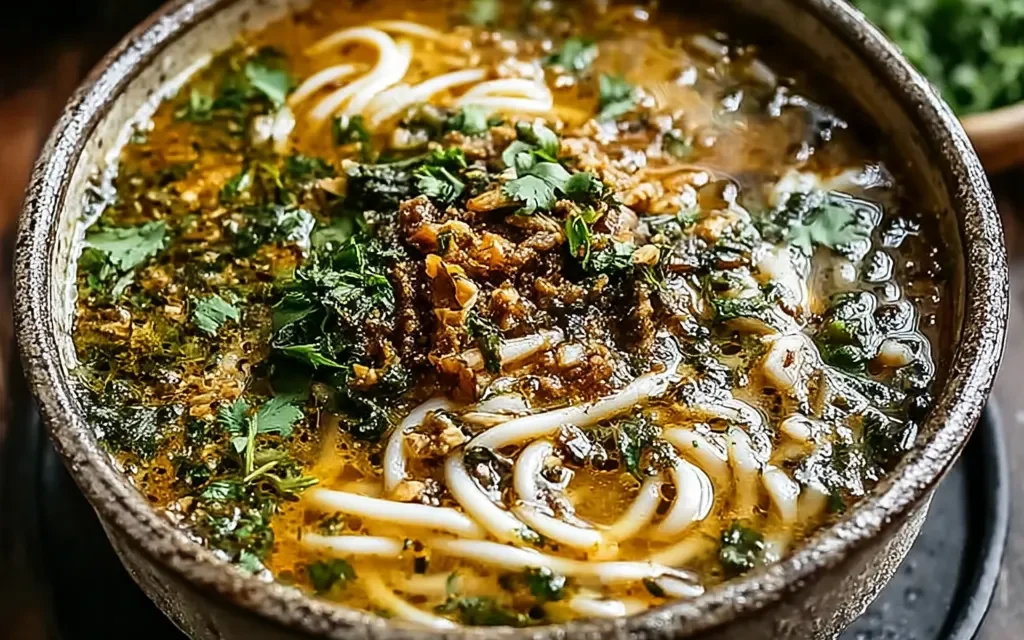
Growing up in a Persian household, the aroma of simmering spices and the sizzle of meat browning in the pan was a familiar and comforting sound. My mother’s Persian Noodle Soup was a dish that always brought the family together, reminding us of our cultural heritage and the warmth of home-cooked meals. The rich, fragrant broth, the tender noodles, and the blend of aromatic herbs – it was a symphony of flavors that I could never resist.
As I grew older and ventured into the kitchen myself, I found myself craving that familiar taste of my childhood. That’s when I set out to master the art of Persian Noodle Soup, determined to recreate the magic that my mother had perfected over the years. After countless experiments and a deep dive into the history and techniques of this beloved dish, I finally landed on a recipe that I’m proud to call my own.
Why This Persian Noodle Soup Recipe Will Become Your Go-To
The Secret Behind Perfect Persian Noodle Soup
What sets this Persian Noodle Soup apart is the perfect balance of flavors and textures. The key lies in the carefully chosen spices – the warmth of cumin, the earthy notes of coriander, the vibrant hue of turmeric, and the subtle sweetness of cinnamon. These spices work in harmony, creating a depth of flavor that is simply irresistible. But the real magic happens when you combine these spices with the richness of the ground beef or lamb and the freshness of the herbs.
The secret, however, is in the way these ingredients are prepared and layered. By sautéing the onions and garlic until they’re fragrant and caramelized, you unlock a world of flavor that then infuses the broth. And by simmering the soup for just the right amount of time, the noodles become perfectly tender, soaking up all the delicious goodness.
Essential Ingredients You’ll Need
At the heart of this Persian Noodle Soup recipe are a few key ingredients that are essential to its authenticity and flavor.
- 1 pound ground beef or lamb: The richness of the meat provides the foundation for the soup, adding depth and heartiness.
- 1 onion, diced: Sautéing the onion until it’s golden brown and caramelized adds a sweetness that balances the other spices.
- 3 cloves garlic, minced: Garlic is a must-have in Persian cuisine, and it lends a pungent aroma that elevates the entire dish.
- 1 teaspoon ground cumin: This warm, earthy spice is essential for that signature Persian flavor.
- 1 teaspoon ground coriander: Coriander adds a slight citrusy note that complements the other spices beautifully.
- 1/2 teaspoon turmeric: Turmeric not only imparts a vibrant yellow hue to the soup but also brings a subtle bitterness that balances the other flavors.
- 1/4 teaspoon cinnamon: A touch of cinnamon adds a subtle sweetness that ties the whole dish together.
Step-by-Step Persian Noodle Soup Instructions
Preparing Your Persian Noodle Soup
With a prep time of 15 minutes and a cook time of 30 minutes, this Persian Noodle Soup is a quick and easy weeknight dinner that’s sure to impress. All you’ll need is a large pot or Dutch oven, a cutting board, and a few basic kitchen tools.
1- Start by browning the ground beef or lamb in a large pot over medium-high heat. Use a wooden spoon to break up the meat as it cooks, creating a crumbly texture.
2- Once the meat is browned, add the diced onion and continue cooking until it’s translucent and lightly caramelized, about 5-7 minutes. This step is crucial for developing the rich, aromatic base of the soup.
3- Next, add the minced garlic and continue cooking for another minute or two, until the garlic becomes fragrant. Be careful not to let the garlic burn, as that can impart a bitter flavor.
4- Stir in the ground cumin, coriander, turmeric, and cinnamon. The spices will bloom and release their aromas, filling your kitchen with the unmistakable scent of Persian cuisine.
5- Slowly pour in the beef or chicken broth, scraping up any browned bits from the bottom of the pot. Bring the mixture to a gentle simmer and let it cook for 10-15 minutes, allowing the flavors to meld.
6- Finally, add the egg noodles, chopped spinach or kale, fresh parsley, dill, and a squeeze of lemon juice. Simmer for an additional 5-7 minutes, or until the noodles are tender. Season with salt and pepper to taste, and your Persian Noodle Soup is ready to serve.
Pro Tips for Success
- Use high-quality, freshly ground spices for the best flavor. Toasting the spices briefly in the pot before adding the broth can also enhance their aroma and depth.
- For a richer, more flavorful broth, consider using a combination of beef and chicken broth, or even bone broth if you have it on hand.
- Adjust the amount of spinach or kale to your personal preference. Start with 2 cups and add more if you want a heartier, more vegetable-forward soup.
- Don’t be afraid to experiment with different types of noodles. While traditional egg noodles are delicious, you can also try using vermicelli, udon, or even gluten-free noodles to suit your dietary needs.
- Garnish your Persian Noodle Soup with a generous sprinkle of fresh parsley and dill, and a wedge of lemon for guests to squeeze over the top.
Serving and Storing Your Persian Noodle Soup
Perfect Pairings for Persian Noodle Soup
This Persian Noodle Soup is a complete meal in itself, but it also pairs beautifully with a variety of side dishes and beverages. For a light and refreshing accompaniment, consider a simple salad with a tangy vinaigrette or a crisp, fresh Persian cucumber salad. If you’re in the mood for something heartier, freshly baked Persian flatbread, known as sangak or lavash, makes the perfect vehicle for sopping up every last drop of the flavorful broth.
As for drinks, a tall glass of chilled Persian tea, such as black tea with cardamom, or a refreshing pomegranate or sour cherry juice would be a delightful complement to this comforting soup. This recipe serves 6 generous portions, making it a wonderful option for family dinners or casual gatherings with friends.
Storage and Make-Ahead Tips
One of the best things about this Persian Noodle Soup is that it’s incredibly easy to store and reheat. Simply let the soup cool completely, then transfer it to an airtight container and store it in the refrigerator for up to 4 days. When you’re ready to enjoy it again, simply reheat it on the stovetop or in the microwave, adding a splash of broth if the soup has thickened too much.
For longer-term storage, you can also freeze the soup in an airtight container for up to 3 months. To reheat, simply thaw the soup in the refrigerator overnight, then warm it up on the stove or in the microwave. The noodles may become slightly softer after freezing, but the flavor will still be just as delicious.
If you’re looking to get a head start on meal prep, you can even make the entire soup in advance and store it in the refrigerator or freezer. The flavors will only continue to develop, making this Persian Noodle Soup an even more flavorful and convenient option for busy weeknights.
Variations and Dietary Adaptations for Persian Noodle Soup
Creative Persian Noodle Soup Variations
While this classic Persian Noodle Soup recipe is a true delight, there are plenty of ways to put your own spin on it. For a seasonal twist, you could swap out the spinach or kale for other fresh greens, such as Swiss chard or beet greens, depending on what’s in season.
Another delicious variation is to add a handful of chopped fresh herbs, like mint or cilantro, to the soup during the final minutes of cooking. This adds a bright, herbaceous note that complements the other flavors beautifully.
If you’re in the mood for a heartier meal, you could also try adding cooked rice or lentils to the soup, turning it into a more substantial one-dish dinner.
Making Persian Noodle Soup Diet-Friendly
For those following a gluten-free diet, you can easily substitute the egg noodles with gluten-free pasta or even zucchini noodles. Simply adjust the cooking time as needed to ensure the noodles or zucchini are tender.
If you’re looking for a lower-carb option, you can swap the egg noodles for spiralized zucchini or shirataki noodles, which will still provide the noodle-like texture without the added carbs.
For a vegan or vegetarian version, simply omit the ground meat and use vegetable broth instead of beef or chicken. You can also increase the amount of vegetables, such as mushrooms, bell peppers, or carrots, to make the soup more hearty and filling.
Frequently Asked Questions
Q: Can I use a different type of meat besides ground beef or lamb?
A: Absolutely! This recipe works well with ground turkey or chicken as well. Just be sure to adjust the cooking time as needed, as different meats may require slightly different cooking times.
Q: How can I adjust the spice level in this Persian Noodle Soup?
A: For a spicier version, you can add a pinch of cayenne pepper or red pepper flakes to the soup. Conversely, if you prefer a milder flavor, you can reduce the amount of cumin, coriander, and turmeric.
Q: Can I make this soup ahead of time?
A: Yes, this Persian Noodle Soup is perfect for making ahead of time. You can prepare the entire soup, let it cool completely, and then store it in the refrigerator for up to 4 days or in the freezer for up to 3 months.
Q: How many servings does this recipe make?
A: This Persian Noodle Soup recipe serves 6 generous portions, making it a great option for family dinners or meal prepping.
Q: What should I do if the noodles become overcooked or mushy?
A: If the noodles start to overcook, simply remove the soup from the heat and let it sit for a few minutes. This will allow the noodles to firm up slightly. If they’re still too soft, you can try adding a few more noodles to the pot and simmering for a minute or two to help absorb some of the excess liquid.

Persian Noodle Soup
- Total Time: 45
- Yield: 6 servings
Description
Discover the delightful flavors of this quick and easy Persian Noodle Soup, a comforting and nourishing dish that’s perfect for any occasion.
Ingredients
1 pound ground beef or lamb
1 onion, diced
3 cloves garlic, minced
1 teaspoon ground cumin
1 teaspoon ground coriander
1/2 teaspoon turmeric
1/4 teaspoon cinnamon
4 cups beef or chicken broth
8 ounces egg noodles
2 cups chopped spinach or kale
1/4 cup fresh parsley, chopped
1/4 cup fresh dill, chopped
Juice of 1 lemon
Salt and pepper to taste
Instructions
1. In a large pot or Dutch oven, cook the ground meat over medium-high heat until browned and crumbled, about 5-7 minutes. Drain any excess fat.
2. Add the diced onion and minced garlic to the pot and sauté for 2-3 minutes until fragrant.
3. Stir in the cumin, coriander, turmeric, and cinnamon. Cook for 1 minute to toast the spices.
4. Pour in the broth and bring the mixture to a boil. Reduce the heat and simmer for 10 minutes.
5. Add the egg noodles and cook according to package instructions, about 8-10 minutes, until al dente.
6. Stir in the chopped spinach or kale and cook for 2-3 minutes until wilted.
7. Remove from heat and stir in the fresh parsley, dill, and lemon juice. Season with salt and pepper to taste.
8. Serve hot, garnished with additional herbs if desired.
Notes
This soup can be made with ground beef or lamb for a traditional Persian flavor. For a vegetarian option, use vegetable broth and omit the meat. The lemon juice adds a bright, refreshing note to the dish.
- Prep Time: 15
- Cook Time: 30
- Category: Soups, Stews & Chili
- Method: Stovetop
- Cuisine: Persian
Conclusion
This Persian Noodle Soup is a true delight for the senses, transporting you to the vibrant flavors of the Middle East with every spoonful. The combination of aromatic spices, tender meat, and fresh herbs creates a harmony of textures and tastes that is simply irresistible. Whether you’re seeking a comforting meal for a chilly evening or a delicious way to explore the rich culinary traditions of Persia, this recipe is sure to become a beloved addition to your repertoire.
So, don’t hesitate – gather your ingredients, follow the simple steps, and get ready to savor the authentic flavors of Persian Noodle Soup. I guarantee it will quickly become a go-to dish in your household, just like it is in mine. And don’t forget to let me know what you think in the comments below – I’d love to hear your thoughts and feedback on this truly exceptional recipe.